White paper
How FX Orchestration will redefine FX Risk Management

TENORA: FX ORCHESTRATION
Executive Summary
Foreign exchange (FX) volatility remains one of the most enduring and unpredictable forces in global commerce. Currency movements continue to impact margins, distort financial visibility, and influence liquidity and investor confidence. For organisations operating across borders, this variability is not a passing trend, but a structural reality that demands constant attention and disciplined management.
Yet many organisations still manage FX through a patchwork of disconnected activities. Forecasting sits with one team, execution with another, reporting with a third, while systems and service providers operate in silos.
This fragmentation creates stale data, slows decision-making, misaligns incentives, obscures pricing, and introduces errors that ripple through financial operations. Over time, it turns FX from a manageable business risk into a persistent source of uncertainty.
FX Orchestration offers a different operating model. It treats FX not as a series of isolated tasks, but as a single, connected flow, from exposure forecasting through to execution, settlement, and reporting. Decisions made at one stage inform the next, creating consistency, control, and clarity across the FX lifecycle.
This paper sets out why fragmented FX models persist, how orchestration resolves their limitations, and why this shift is becoming the new standard for managing FX.
Quote
"FX has always been one process. When you manage it as one, everything becomes clearer, faster, and more controlled."
TENORA: FX ORCHESTRATION
Contents
introduction
FX risk has outgrown fragmented models
FX risk has always been a fundamental reality for global businesses, and its unpredictability remains as material today as ever. For companies operating across borders, even a shift of one or two percent can alter quarterly performance, while prolonged double-digit swings can redefine cash runway and strategic options.
Despite this enduring importance, many organisations still manage FX through outdated workflows. Spreadsheets, manual data consolidation, infrequent decision cycles, and a rotating set of external providers dominate the process, with each focused on a single fragment rather than the full picture. This approach leaves businesses exposed to inefficiencies and blind spots at precisely the time when clarity and speed matter most.
The result is an FX operating model shaped more by historical habit than by deliberate design, one that struggles to deliver consistent visibility, timely decisions, or effective governance in increasingly complex markets.
DISCONNECTED BY DESIGN
Fragmentation of FX Infrastructure
- 1 or more ERPs
- Inconsistent regional processes
- Trade data held with counterparties
- Slow to consolidate and act
- Opaque pricing
- Manual quote comparison and execution
- Disconnected ERP integrations
- Manual payment coordination
- Excel, ERPs, and TMS
- Manual consolidation across teams
The problem
Why fragmentation persists
To understand why orchestration is needed, we must acknowledge the forces that shaped the current landscape. FX processes did not become fragmented by accident; they became fragmented because the industry around them did.
Over time, the FX market evolved around specialisation. Different providers focus on specific stages of the FX lifecycle (Pre-Trade, Trade, or Post-Trade), each delivering value within a defined domain, but no segment is structurally designed to unify the process end-to-end.
As a result, alignment across the full FX lifecycle is left to individual organisations to solve.
The matrix below shows how FX market participants align to the pre-trade, trade, and post-trade lifecycle.
The problem
How FX capabilities are typically distributed across the lifecycle
Strategy and design-led engagement, typically project-based.Limited involvement in execution or ongoing operational workflows.
Human-led strategic input with some execution support. Often relianton manual processes and limited scalable infrastructure.
Accounting-first systems optimised for reporting and compliance, not strategic FX decision-making or execution.
Strong post-trade data and accounting workflows. Pre-trade tools are limited or geared toward large, complex organisations.
Execution-centric models with mature trading and settlement capabilities, but limited structured pre-trade context.
Efficient digitisation of execution and payments, typically disconnected from forecasting, policy, and strategy.









Strong Offering
Average offering
Weak offering
The problem
How fragmentation shows up inside organisations
When the FX ecosystem is fragmented, internal FX processes become fragmented too. Information is spread across systems, teams, and service providers that werenever designed to operate as a single flow.
In practice, forecasts are often compiled manually from multiple sources. Methodologies vary across business units,and decisions are made on partial or outdated information.Hedging activity becomes inconsistent, execution pricing lacks context or transparency, and trades must be re-entered across platforms to support reporting, settlement, and accounting.
What ultimately breaks down is information flow — the ability for insight to move cleanly from exposure identification throughto execution and ongoing monitoring.
What fragmentation costs organisations
The cost of fragmentation is cumulative. It appears asslow and reactive decision making, inconsistent strategies, operational risk, opaque execution costs, and unexpected P&L volatility. It also makes FX risk difficult to communicate clearly to boards, investors, and other stakeholders.
Most damaging of all, fragmentation undermines an organisation’s ability to consistently answer the most fundamental questions of FX risk management:
• Where are we exposed?
• How is that exposure changing?
• What action should we take next?
Without a connected process to answer these questions, FXrisk management becomes reactive, responding to market movements after they occur rather than managing risk deliberately as conditions evolve.
Why fragmentation persists
Fragmentation persists not because its effects are unknown, but because the FX market is structured around narrow incentives.
Each segment of the market delivers value within its own domain (advice, execution, accounting, or settlement) but no participant is rewarded for improving outcomes across the full FX lifecycle.
Fragmentation endures in part because opacity benefits the system that produced it.
In many cases, greater transparency, faster decision making and streamlined workflows reduce the demand for manual intervention, bespoke advice, or opaque execution, therefore reducing the volume or margins of the services built around them.
As a result, the responsibility for connecting Pre-Trade, Trade, and Post-Trade processes falls to the corporate itself. Finance teams are left to integrate systems, reconcile data, and govern decisions across providers that were never designed to operate within a single operating model.
THE ORCHESTRATION FRAMEWORK
A model built for clarity and control
FX Orchestration rebuilds the operating model around how FX actually behaves in the real world, as a cyclical system of information and actions rather than a series of disconnected tasks.
Rather than optimising individual activities in isolation, orchestration defines how the entire FX lifecycle operates as a single system. Decisions made at one stage inform the next, creating consistency, feedback, and control across Pre-Trade > Trade > Post-Trade activity.
A unified workflow across the FX lifecycle
Orchestration begins by treating policy setting, exposure forecasting, pricing, execution, settlements, and reporting as interdependent steps. Hedging objectives and target rates are defined upfront, informed by forecasts, and continuously refined as information flows through the lifecycle.
Information from one stage must shape the next, creating a continuous loop of learning, refinement, and control.
Quote
“FX workflows were always meant to operate as one fluid chain of actions. Their value only emerges when information moves between each stage with intent.”
FX Orchestration: the operating model
the foundations
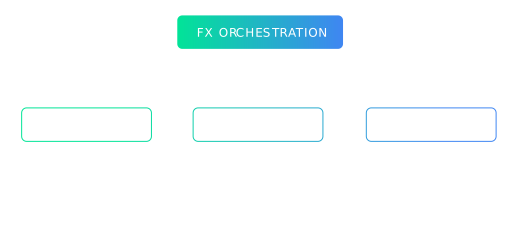
The 3 foundations of FX Orchestration
Each addresses a different failure point in traditional FX operating models, fragmentation, inconsistency, and stalled decision-making.
The organisational architecture
This is how FX capability is structured and sustained.
Orchestration depends on the organisation’s ability to align accountability and governance around FX activity. Without this foundation, even the best technology and strategy cannot scale.
This foundation brings together:
Systems that move data quickly and accurately across the FX lifecycle
People with clearly defined roles, ownership, and decision rights
Processes that are consistent, repeatable, and scalable
Policies that provide boundaries and discipline for decision-making
Together, these elements turn intent into operational capability, ensuring FX activity can be executed reliably, not just planned.
We refer to this as
SP3.
The value-creation cycle
This is how FX risk is identified, acted on and controlled.
Orchestration is not static. FX value is created through a continuous cycle of actions that translate information into outcomes.
This cycle includes:
Identifying exposures, risks, and opportunities
Measuring their scale, timing, and potential impact
Managing them through strategy selection and execution
Monitoring performance, liquidity, and future risk
These actions define how FX risk is controlled and how confidence is built across volatile markets. When this cycle is fragmented, orchestration collapses into reactive execution.
We refer to this as
IM3.
The pathway to continuous improvement
This is how organisations evolve without disruption.
Orchestration is not deployed overnight. It requires a structured progression that allows organisations to build capability while maintaining operational continuity.
This pathway follows a clear sequence:
Design the FX operating model
Develop the supporting systems, data structures, and controls
Implement workflows, governance, and execution logic
Operate consistently, reviewing outcomes and refining decisions
This progression prevents transformation from becoming destabilising, allowing orchestration to mature alongside the business.
We refer to this as
DDIO.
PRACTICAL GUIDANCE
How organisations begin the journey
FX Orchestration does not begin with a wholesale transformation. It begins with visibility.
Before organisations can unify workflows or mature their operating model, they need a clear, shared understanding of where fragmentation exists today, and where it is slowing decision making, execution, and control.
The journey toward orchestration starts with two simple, deliberate steps that turn insight into progress.
STEP 1:
Make fragmentation visible
The most effective starting point is a structured diagnostic that reflects how FX actually operates across the organisation.
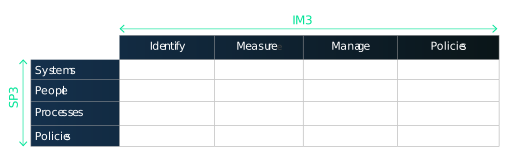
The FX Orchestration Diagnostic Matrix maps SP3 (systems, people, processes, policies) against IM3 (identify, measure, manage, monitor). Its purpose is not to score maturity, but to reveal where fragmentation disrupts the FX lifecycle.
At its core, the matrix addresses a single question:
How effectively do your systems, people, processes, and policies identify, measure, manage, and monitor FX risks and opportunities?
This matrix facilitates asking a series of very specific, relevant questions, for example:
- How effectively do systems support the identification of FX risk?
- Where do processes slow or fragment monitoring and response?
- How clearly do policies govern real-time FX decisions?
The result is immediate clarity—revealing duplicated effort, missing data, and process bottlenecks, and creating a shared view of where orchestration is working, where friction persists, and where improvement matters most.
That shared view is a starting point for DDIO, allowing organisations to deliberately align on design priorities, develop the capability to support them, implement change in sequence, and operate with increasing consistency over time.
FX Orchestration diagnostic matrix
This matrix provides a practical way to surface specific questions about FX decision-making, execution, and control.
PRACTICAL GUIDANCE
STEP 2:
Progress in sequence, not all at once
Once fragmentation is visible, the goal is not to fix everythingat once. It is to move forward with intent.
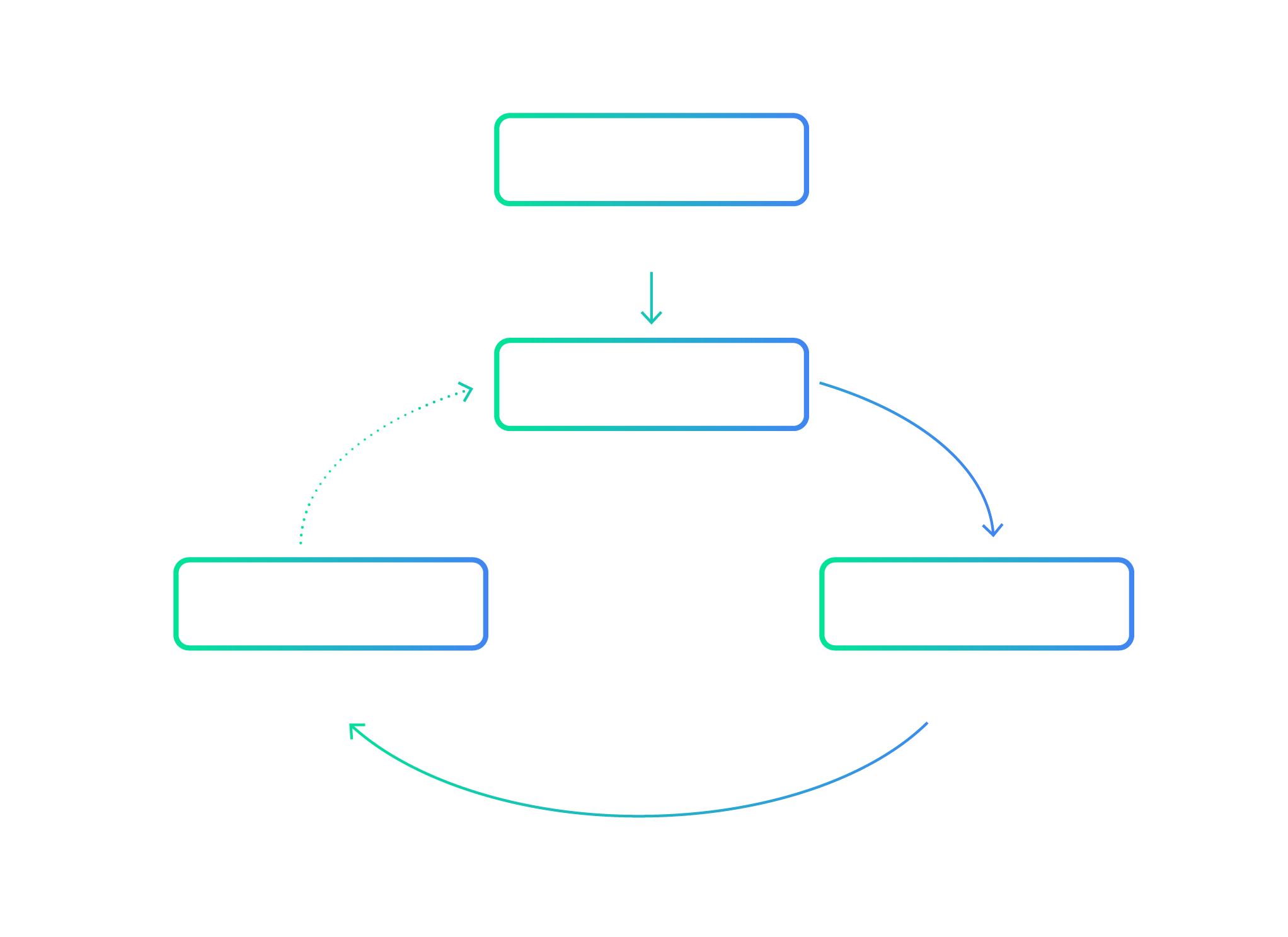
DDIO provides the discipline for doing this well:
Design the changes that will have the greatest impact
Develop the supporting data, controls, and capability
Implement improvements in manageable increments
Operate consistently before moving on
This sequence prevents transformation from overwhelmingteams or disrupting day-to-day operations. Instead of large, risky programmes, organisations make appropriately sized, intentional improvements that compound over time.
By progressing in sequence, organisations build confidence alongside capability, ensuring orchestration matures in step with the business, rather than ahead of it.
Quote
"Small steps done consistently beat one giant leap you never finish"
The DDIO continuous improvement cycle
The new standard
Why FX Orchestration will become the standard
The case for orchestration is not only philosophical, it ispractical and increasingly unavoidable.
Technology is accelerating expectations
Open banking, AI and automation are reshaping howdata moves across organisations. Spreadsheets will fadeas the central repository for FX decisions. Systems thatsupport real-time visibility, rapid scenario testing, andcontinuous decision-making will become the norm.
Stakeholders expect transparency
Boards, auditors, investors, and lenders increasinglyexpect companies to demonstrate how exposures areidentified, how decisions are made, and how costs areincurred. Fragmented workflows simply struggle toaccurately provide this level of clarity or confidence.
The market will consolidate toward end-to-endoperating models
As FX Orchestration becomes better understood,fragmented point solutions will lose relevance.Organisations will increasingly demand providers andoperating models that support the entire FX lifecycle, notjust isolated stages of it.
Early adopters gain strategic advantage
Organisations that move toward orchestration makefaster decisions, communicate more confidently withstakeholders, and operate with stronger governance. Involatile markets, that advantage compounds quickly.
Quote
“Once a business sees an end-to-end model, it becomes difficult to justify anything less.”
the Furture of fx
Case Studies
Regaining FX control during rapid growth
BEFORE FX ORCHESTRATION
Rapidly scaling business with USD costs andglobal FX revenue
Small margins ~5%, with no pricing power
Even average FX moves destroy profitability
No in-house hedging experience
AFTER ADOPTING FX ORCHESTRATION
Implemented consistent cash flow forecasting process
Implemented standardised tool to manage a hedging policy and stress test budgeted performance
Kept hedging simply, only forwards at first, and selectively options once processes matured
Protected budget, kept hedging costs low, and
about the author
Tom Alexander
Tom Alexander is Chief Product Officer and Co-Founder of Tenora, with more than a decade of experience in FX risk advisory, treasury consulting, and financial markets analysis. He holds a Master’s in Finance & Banking from the University of Sydney and has led the design and management of FX hedging and risk forecasting programmes for international businesses and specialist market participants. Tom’s experience in real-world FX operations exposed recurring challenges with opaque pricing, fragmented workflows, and disconnected decision-making. These challenges helped shape Tenora’s mission to improve transparency and coherence in FX riskmanagement. At Tenora, Tom leads product strategy and development. His focusis on enabling finance teams to make clearer decisions, execute with confidence, and maintain control across the full FX lifecycle.
TAKING THE NEXT STEP
Put theory into practice


Disclaimer This white paper is provided for general informational and educational purposes only and is intended to contribute to discussion and understanding of foreign exchange (FX) management practices and technology-led operating models. This document relates solely to the activities of Tenora Financial Technologies Limited and its provision of technology, data, and analytical tools. It does not refer to, promote, or describe any regulated financial, investment, payment, or advisory services. Tenora Financial Technologies Limited is not authorised or regulated by the Financial Conduct Authority or any other regulatory authority. Nothing contained in this document should be construed as financial, legal, regulatory, tax, or investment advice, a personal recommendation, or an inducement to engage in any transaction or to deal in any financial instruments. This document does not form part of any offer, solicitation, or invitation in relation to any financial product or service. The content of this paper does not take into account the specific objectives, financial situation, or needs of any individual or organisation and should not be relied upon as the basis for any decision. Recipients should seek independent professional advice before making any financial, commercial, or regulatory decisions.

41 Moorgate, London, EC2R 6LL.
Email: connect@tenora.com
Telephone: +44 (0)203 697 0300
