In the press: Fexco investment coverage roundup
A roundup of the coverage following Fexco's £7.5m commitment to Tenora.

FX mismanagement has ended careers. Tom Alexander outlines the six metrics every board needs to see, and why most CFOs struggle to produce them cleanly.

FX mismanagement has ended careers. Not just at hedge funds or investment banks, but at mid-market businesses where a CFO failed to hedge a meaningful exposure, or hedged the wrong way, and the board found out only once the impact was realised and irreversible. I have seen it happen. The problem is rarely that the CFO did not know FX was a risk. It is that when the question came, there was no clean answer. No policy on record. No data to show what was covered, what was not, and why.
Board reporting on FX is not about proving you got the rate right. It is about demonstrating that the risk is understood, the process is sound, and decisions are documented. Get that right and you are protected, even in a bad quarter.
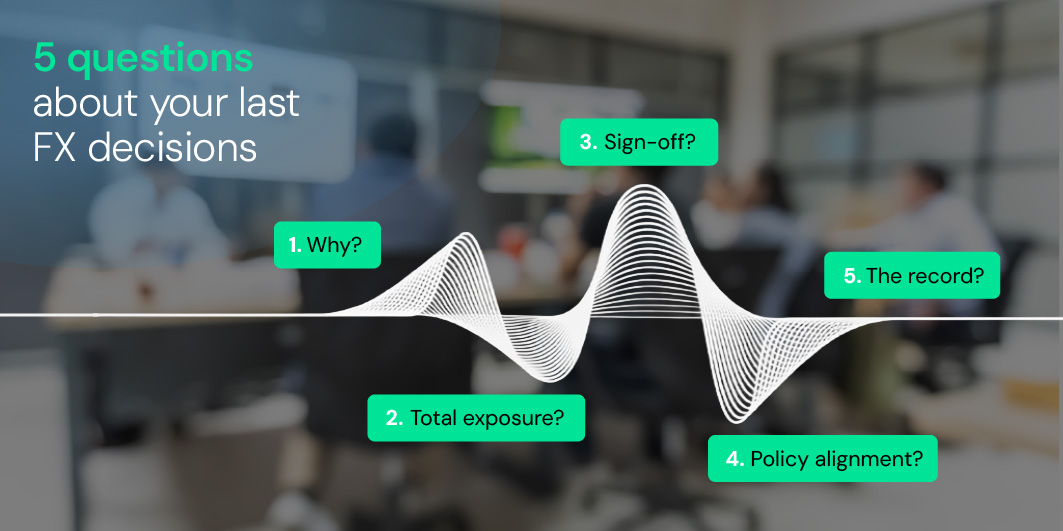
Here is what boards actually need to see.
The starting point. What is the business's net exposure in each currency - receivables, payables, forecasted revenue, committed costs? This should be broken down by currency and time horizons, typically monthly or quarterly. Boards need to understand the scale of the risk before they can assess the effectiveness of how it is being managed.
What percentage of each exposure ought to be hedged, and has this been achieved? This is the metric most boards ask for first and that many treasuries struggle to answer cleanly. A well-structured policy will define required hedge ratios by tenor, typically higher coverage in the near term with tapering as you move out. Once agreed by the board, treasury has a clear mandate to consistency deliver hedging compliance.
The spread between the rate locked in and the midmarket rate. This is increasingly scrutinised by boards who understand that hedging is not free. Transparency here builds credibility as a CFO who can explain the hedge cost and how it's being managed is in a far stronger position than one who cannot even demonstrate what the cost is.
What is the current unrealised gain or loss on the hedge book? This should not be framed as assessing whether the hedges are 'working' or not. The aim of reporting MTM is to frame the likelihood of margin calls with hedging counterparties that could result in liquidity constraints for the business.
Which banks or brokers is the business using for FX execution, what is the exposure to each, and what is the credit worthiness of each? Concentration risk in FX counterparties is a real financial consideration and demonstrating that it is monitored is part of a mature framework.
Is the business on track to meet or exceed budget? How much are currency movements impacting revenue, margin, or EBITDA, and what is the reduction in earnings volatility provided by hedging? This bridges the treasury function to the P&L, making FX performance legible to non-treasury board members. Show it as a story and let the board connect the hedging activity to the business outcome.
In my experience, businesses do not typically fail at FX because they made a bad call on rates. They struggle because risk visibility is lacking and actions are reactive, decided under pressure from spreadsheets and processes that were not built for purpose. By the time the board asks the question, it is too late to look organised.
The CFOs who manage this well are the ones who can confidently walk into a board meeting with clean data, a clear policy, and a story that shows the risk is under control.
This is one of the driving factors behind building Tenora. Across my career I have watched finance teams that understood their FX risk fail to demonstrate it month on month. Not because the work was not being done, but because the required information lived in too many places to design and deliver consistent outcomes.
Tenora connects the full FX lifecycle in one platform. Exposures, current hedging, execution, payments and accounts. All visible, all linked, all reportable. When the board asks the question, the answer is already there. It's documented, auditable, and defensible, not because someone worked through the weekend to pull it together, but because the system captures it as a matter of course.
That is what good FX governance looks like. And it is what every CFO deserves to be able to show.
Take the first step towards smarter, more transparent FX decisions.
Our blog